Our Pick: Top 5 Crystals for Trauma
Carrying It a Little Lighter: Crystal Support for Trauma
Trauma has a way of staying present in the body long after the actual event has passed, shaping reactions and relationships in ways that don't always trace back cleanly to their original source. Healing rarely moves in a straight line; some days feel like real progress and others feel like a step backward, and both are simply part of an emotional recovery that doesn't follow a predictable schedule. PTSD is one specific, clinically recognized way trauma can persist, though plenty of people carry a lasting impact without ever meeting that particular threshold, and both deserve real care regardless. Resilience isn't the absence of being affected; it's the capacity to keep moving forward while still carrying what happened, at whatever pace that actually requires. Self-compassion matters enormously here, treating yourself with the same gentleness you'd extend to anyone else who'd lived through something difficult. Support and safety both matter too, since healing tends to happen more fully in the presence of genuine care rather than in isolation. Growth can eventually follow, not because the trauma was worth it, but because a person is capable of building something meaningful even after something difficult. There can be small, grounding companions for the ongoing work of carrying it a little more lightly.
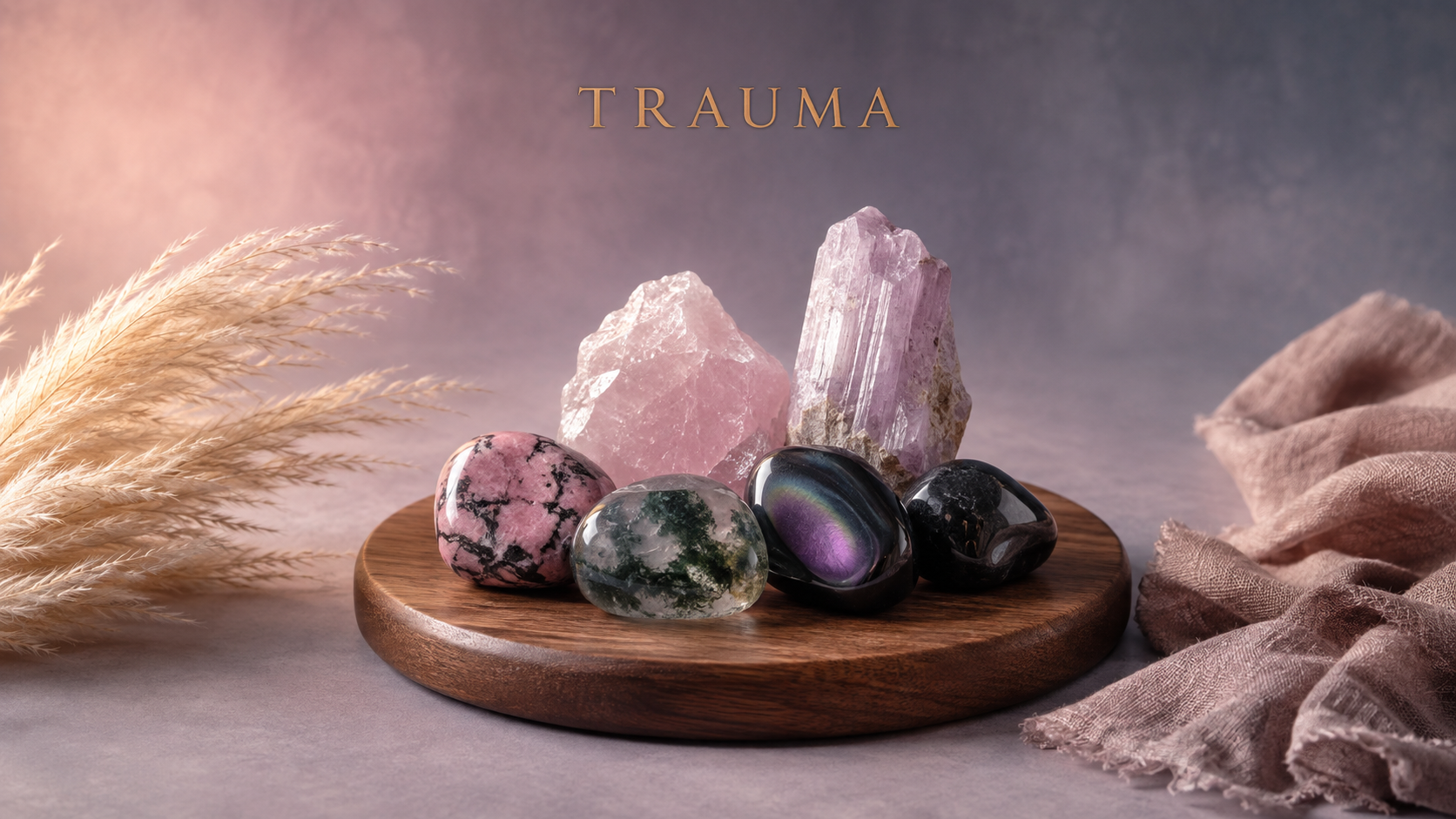
Pink Rhodonite supports the gentle work of healing, helping you carry the past a little more lightly rather than shouldering its full original weight indefinitely. A stone of compassion and emotional purpose, it opens the heart and clears old wounds, encouraging the kind of forgiveness that liberates the person carrying the weight rather than excusing whatever caused it. Pink Rhodonite is particularly suited to the long, uneven work of healing after something genuinely hard, supporting a heart that's ready to soften even if it isn't ready to forget entirely. It encourages treating a difficult chapter as something to carry more gently over time rather than something requiring a complete, final resolution before any relief is allowed. Full resolution isn't always available, and isn't actually required, for the weight of something difficult to become noticeably lighter to carry. For anyone who's been carrying something heavy for longer than feels sustainable, Pink Rhodonite offers the gentleness to lighten the load.
Rose Quartz offers a tender, healing warmth, encouraging genuine self-compassion rather than the harsh self-judgment trauma can sometimes leave behind. Known as the stone of unconditional love, it dissolves old emotional wounds and replaces them with a compassionate warmth that begins with how you treat yourself, especially on the harder days. Rose Quartz is particularly useful for the self-blame that sometimes follows difficult experience, a quiet sense of responsibility for something that was never actually the surviving person's fault. It supports treating yourself with tenderness rather than judgment, recognizing that surviving something hard doesn't require having handled every part of it perfectly. That instinct toward self-blame is common and understandable, even though it rarely reflects what actually happened as clearly as it feels like it does. It tends to fade with time and honest reflection, but it rarely disappears entirely on its own without some deliberate, gentler attention paid to it. For anyone whose self-compassion has been harder to access than it should be, Rose Quartz offers the warmth to finally extend it.
Moss Agate nurtures steady, grounded growth, one gentle step at a time rather than an expectation of healing all at once or on any fixed timeline. Carrying a deep connection to the patient tending of growing things, it brings the energy of new beginnings and a slow, steadily accumulating growth that feels earned rather than rushed. Moss Agate supports trusting a genuinely gradual process, useful when healing feels frustratingly slow compared to how quickly the original difficulty actually happened. It encourages treating recovery the way a gardener treats a season, with patience for what's still developing rather than frustration that it isn't finished growing yet. Healing rarely moves at the same pace as the event that necessitated it, and that mismatch is worth expecting rather than treating as a sign something's going wrong. For anyone whose healing has felt slower than they expected it to be, Moss Agate offers the patience to trust its actual pace.
Rainbow Obsidian supports a gentle release of what's been carried too long, opening space to move forward rather than staying tied indefinitely to something already over. The gentler face of Obsidian's protective, truth-revealing power, it works through the Heart chakra, bringing light into emotional darkness rather than simply exposing it, paired with the warmth needed to actually release it. Rainbow Obsidian is particularly known for cutting the energetic weight of what's already ended, returning that energy gently so a person can move forward without carrying an invisible burden alongside them. It supports genuine emotional release rather than continued attachment to something that can't actually be changed or undone at this point. Real hope tends to become available once a person is no longer entirely tied to what's already finished, even if it took real time to loosen that tie. For anyone who's felt tethered to something that's genuinely over, Rainbow Obsidian offers the release to finally move forward.
Kunzite offers a safe, open-hearted space, inviting connection to return in its own time rather than demanding vulnerability before it actually feels possible again. Known as a stone of pure love and the highest form of emotional courage, it aligns the Heart chakra with the Crown, creating a healing communication between mind and heart that most people find immediately calming. Kunzite is particularly suited to the specific caution that develops around closeness after something difficult, a guardedness that made complete sense at the time it formed. It supports softening that guardedness gradually, on your own actual timeline, rather than forcing openness before trust has genuinely had the chance to rebuild. Trust that's been broken tends to rebuild slowly and unevenly, and treating that pace as reasonable rather than as a personal failing tends to help it along. For anyone whose guardedness has made connection feel harder to access lately, Kunzite offers the safety to let it return gradually.
Apache Tears offers quiet, grounded comfort, a steady companion for healing at your own pace rather than a pace anyone else has decided should be reasonable. Named for a legend of shared grief, they carry an unhurried, patient quality into whatever a person is actually processing, cleansing old emotional wounds without demanding a fast recovery in return. Apache Tears is especially suited to the specific unevenness of trauma recovery, good days and hard days arriving without much predictable pattern between them. It supports staying present through that unevenness rather than treating a harder day as evidence that no real progress has actually been made. Recovery that isn't linear is still recovery, even on the days it doesn't feel that way from the inside of it. For anyone whose healing has felt less steady than they expected it to be, Apache Tears offers the comfort to keep moving at your own pace regardless.
Trauma rarely resolves on a predictable schedule — it eases through patience, genuine self-compassion, and enough safety to let healing unfold at its own actual pace. Pink Rhodonite and Rose Quartz support carrying the past more gently and treating yourself with the same compassion you'd extend to anyone else. Moss Agate and Rainbow Obsidian ease the frustration of a slow timeline and support genuinely releasing what's already over. Kunzite and Apache Tears offer the safety and steady comfort that make it possible for connection and recovery to return gradually, on their own timeline. These stones can offer gentle, grounding support alongside the process, though they aren't a substitute for therapy or professional trauma care, and working with a qualified therapist remains one of the most effective paths through it. Reaching for one of these stones during a difficult stretch can be a small, physical reminder that healing is genuinely possible, even when it moves slower or less evenly than hoped.