
Our Pick: Top 5 Crystals Addiction
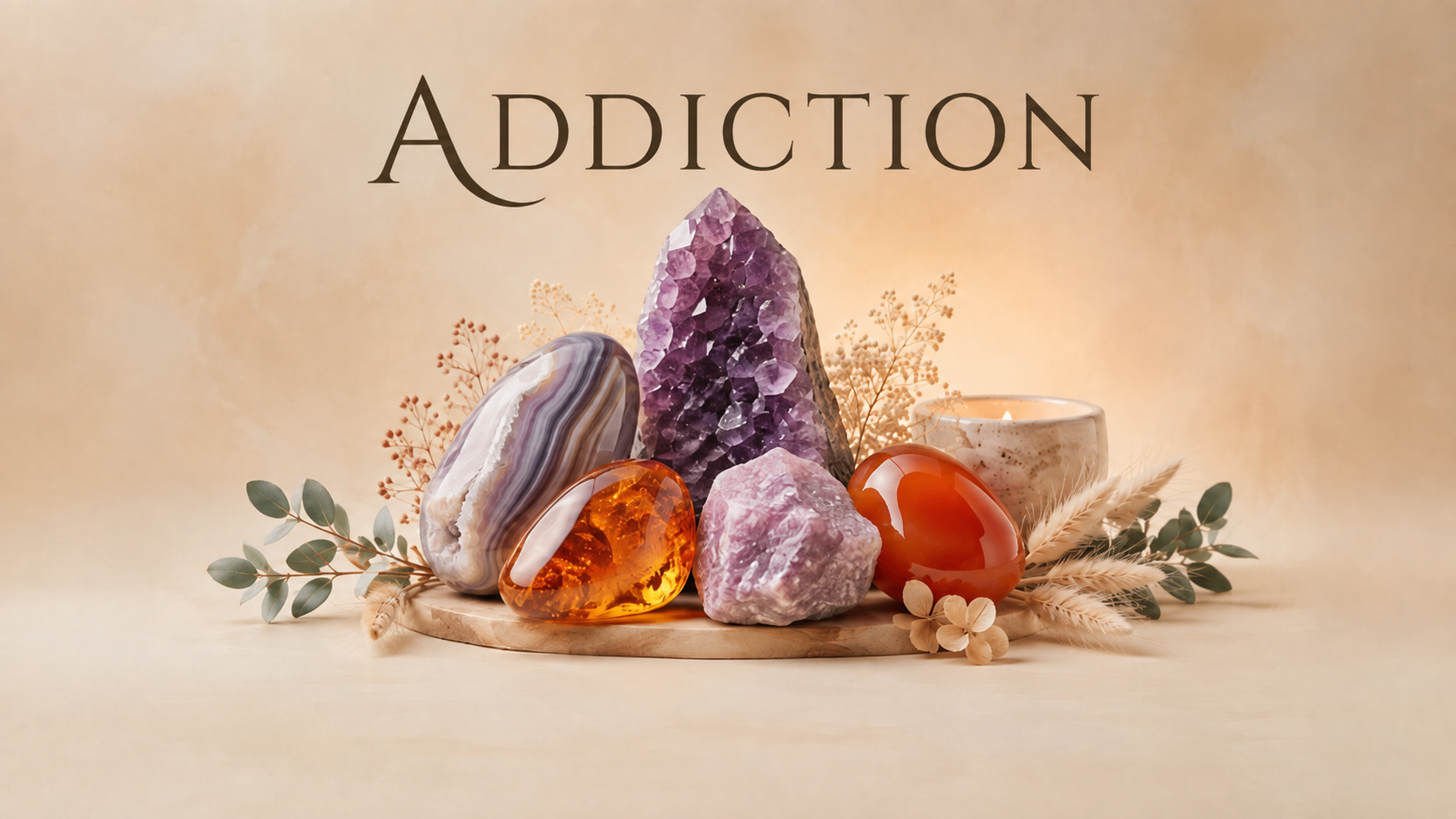
Finding Your Way Back: Crystal Support for Recovery
Recovery rarely moves in a straight line, and anyone who has lived through it knows that healing looks less like a single decision and more like thousands of small ones, repeated on the hardest days as faithfully as the easiest. Whether you're building early sobriety, working to loosen the grip of a long-held dependency, or simply trying to meet a craving with something steadier than willpower alone, the process asks for patience — with the process and with yourself. The nights can be long, emotional triggers can arrive without warning, and the work of noticing one before it turns into an old, automatic pattern is real work, even when no one else can see it happening. There's no shortcut through this kind of change, no single object that does the healing for you. But there can be companions for the journey: small, grounding reminders you carry close, ones that steady you as you rebuild your relationship with yourself, one intentional choice at a time. That's the role jewelry plays here — not a fix, but a quiet, wearable anchor for the strength you're already building.
Amber carries a sun-warmed, ancient vitality unlike almost any other stone in this collection — it's fossilized tree resin, quite literally millions of years of sunlight and living material held in warm, glowing suspension. That ancient quality feels appropriate for the slow work of recovery, work that asks you to trust a process much larger and older than any single hard day. Worn during this season, Amber is often described as drawing off heaviness and replacing it with warmth, optimism, and a renewed sense of belief in yourself — not by making difficult feelings disappear, but by offering enough steady, grounded energy to help you move through them instead of around them. Amber also lends itself to healing boundaries: the ability to say no to old patterns, old company, or old versions of yourself that no longer serve where you're headed. It doesn't ask you to feel differently before you're ready. It simply offers a warm, ancient kind of company for the in-between — the part of recovery that isn't dramatic, just steady, repeated, and real. Renewal isn't built in a single leap; like amber itself, it forms slowly, under pressure, into something that lasts — and this piece is meant to sit close through that whole unhurried process.
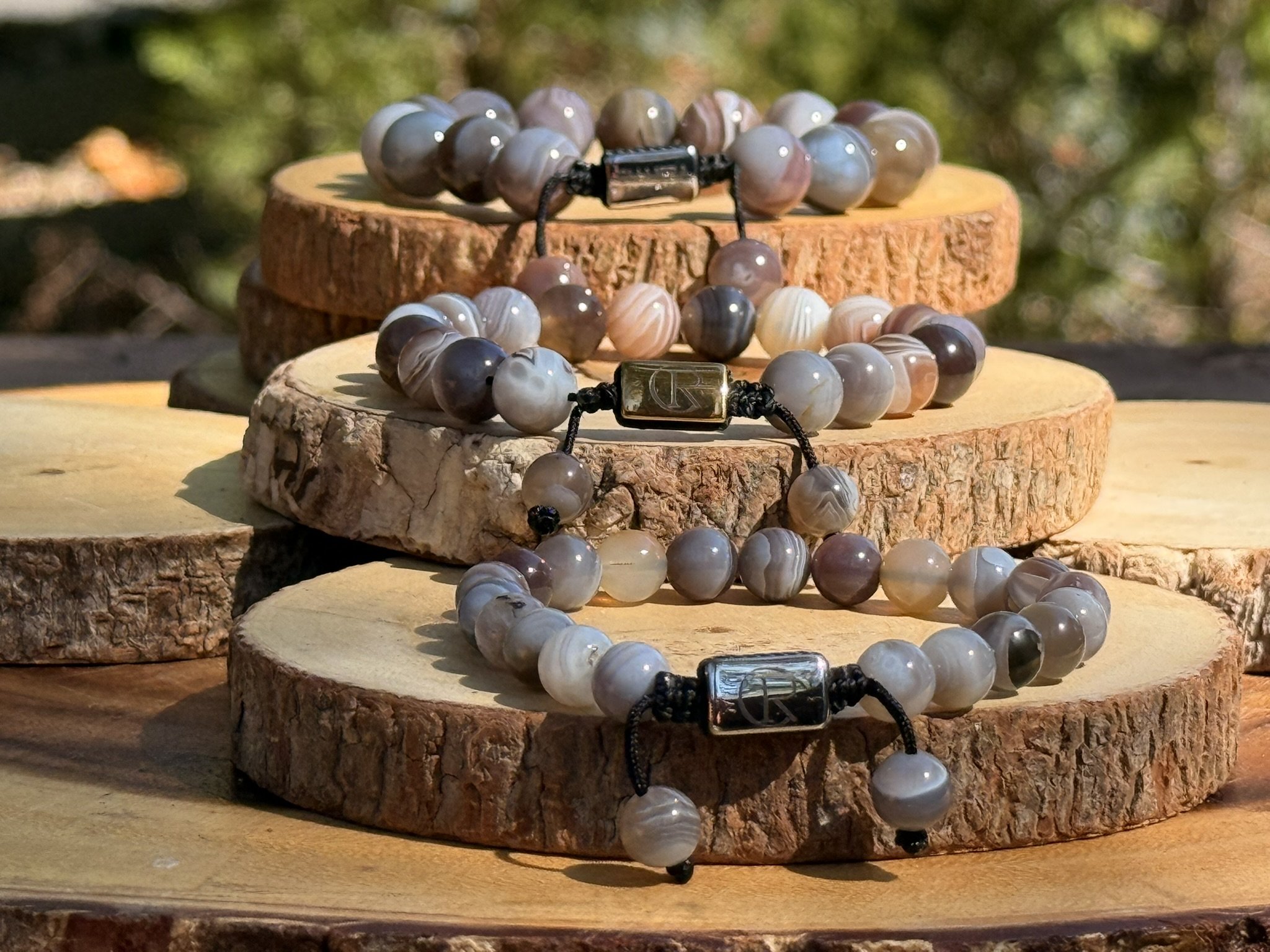
Known widely as the comfort stone, Botswana Agate wraps the emotional body in a gentle, banded warmth that feels less like a burst of energy and more like a steady hand on your back. Long favored by people working to break a dependency, its comfort is patient rather than performative. Recovery is rarely a straight climb; there are good days and there are days that feel like sliding backward, and Botswana Agate's steadiness is built for both. It also eases the isolation that so often accompanies dependency — the particular loneliness of feeling different from the people around you, even the ones who care about you deeply. For anyone whose mind tends to circle the same difficult thought or old craving late at night, Botswana Agate offers a quieting presence, something to hold onto that doesn't ask you to solve everything at once. It stays close for the long, nonlinear, unglamorous work of getting well — not flashy, not urgent, just present, the way real support usually is. As jewelry, it's simply something to touch when your mind gets loud — proof, in physical form, that comfort and steadiness are allowed to be part of this process too.
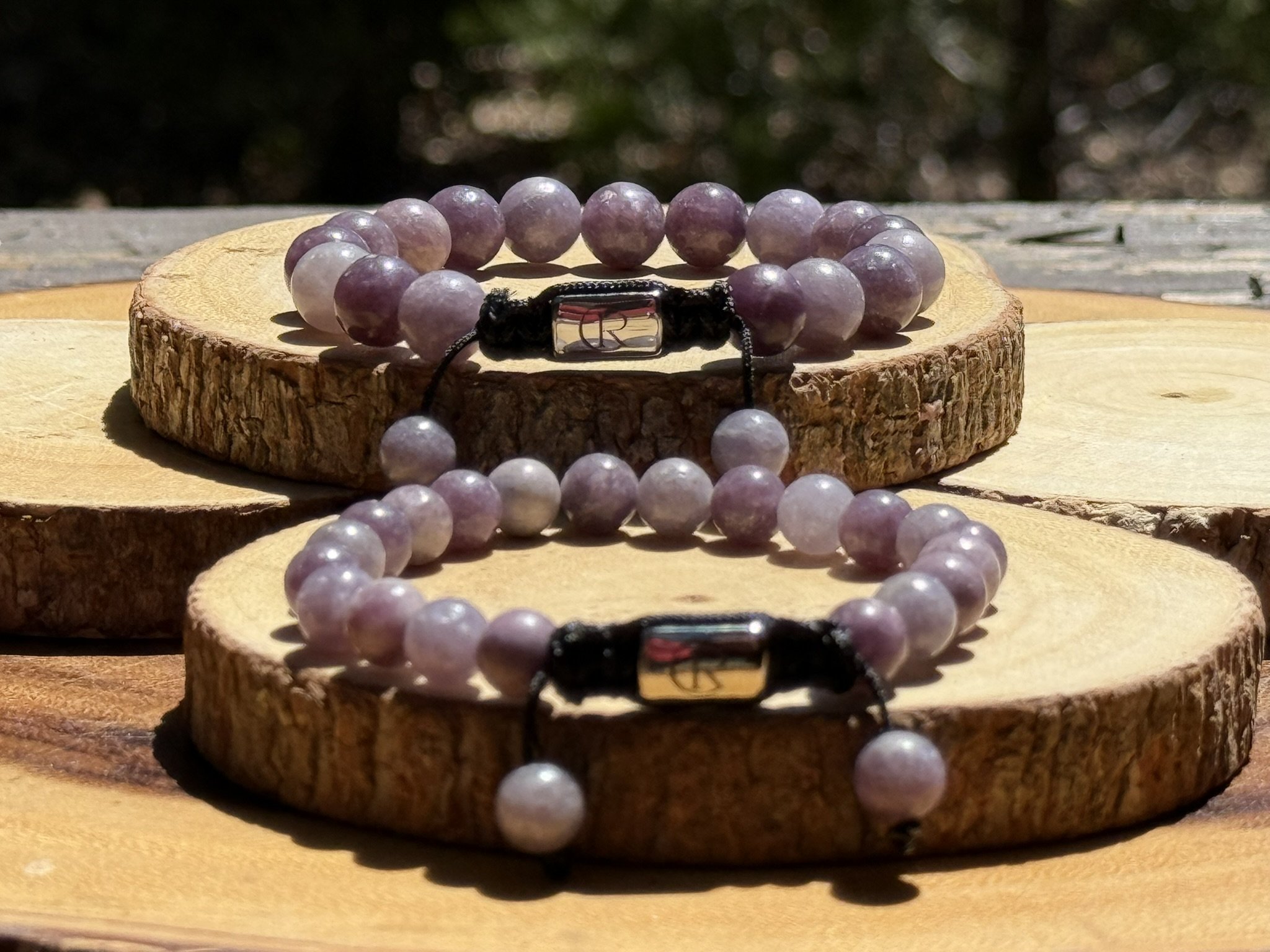
Lepidolite is known as the stone of transition, and few phases test that idea more than recovery, where letting go of old behavioral patterns can feel less like arrival and more like being suspended between two versions of yourself. It supports the gentle, thorough release of habits and reactions that have outlived their usefulness, reorganizing the emotional landscape of a life without demanding the drama that big change usually seems to require. Because much of Lepidolite's reputation comes from its naturally calming composition, it's often reached for during the mood swings that can accompany real change — the good-day, hard-day unpredictability that can make relapse feel like it's always one bad afternoon away. Lepidolite doesn't promise to eliminate that unpredictability, but it offers a calmer undertow beneath it, an even-keeled presence that makes the next right step feel findable even when you can't see very far down the road. It's a stone for the middle of becoming someone different — not the triumphant ending, but the quiet, ongoing work of it — and for anyone who needs company while they hold steady through a mood swing instead of letting it tip into an old pattern.
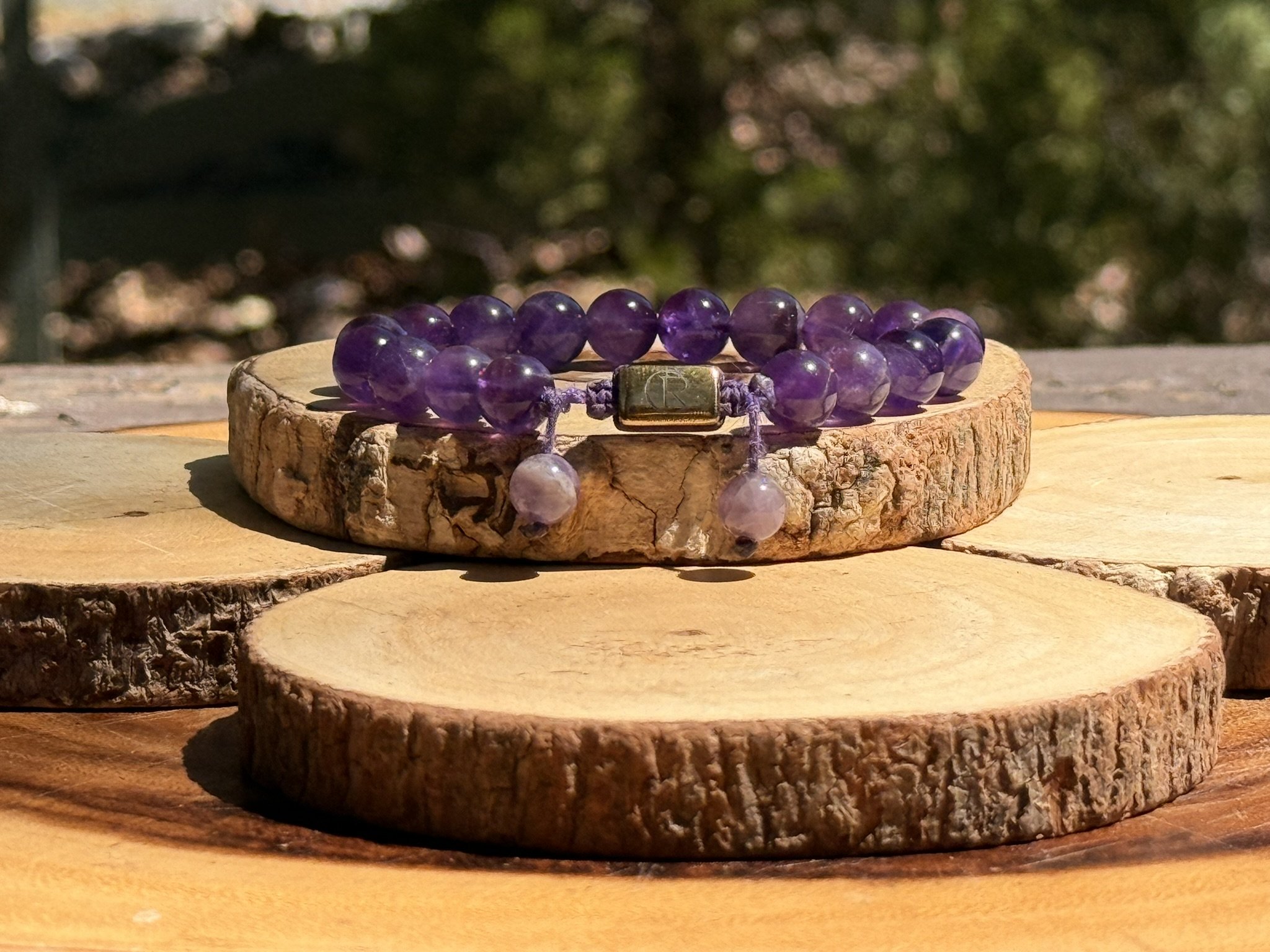
Amethyst's name comes from the Greek améthystos, meaning “not intoxicated” — the ancient Greeks so associated this stone with sobriety that they carved wine goblets from it, believing its presence kept the mind clear even in the middle of celebration. That reputation has followed Amethyst for centuries, and it remains one of the stones most closely tied to self-control and steady awareness. Amethyst is often described as helping quiet the noise that makes a craving feel louder than it actually is, creating a still, clear space where the craving can be noticed, named, and met with intention instead of an old, automatic reaction. It's a stone for the pause — the breath between an urge and a decision — and for the kind of heightened awareness that makes it easier to recognize an emotional trigger before it takes the wheel. Amethyst won't quiet a craving for you, but it offers a steadying presence for the moment you choose to meet it consciously, the same way it was once believed to steady the mind at the bottom of a glass. That clarity — the real kind, the kind you build for yourself — is always available to return to, and this piece is simply an elegant nudge back toward it.
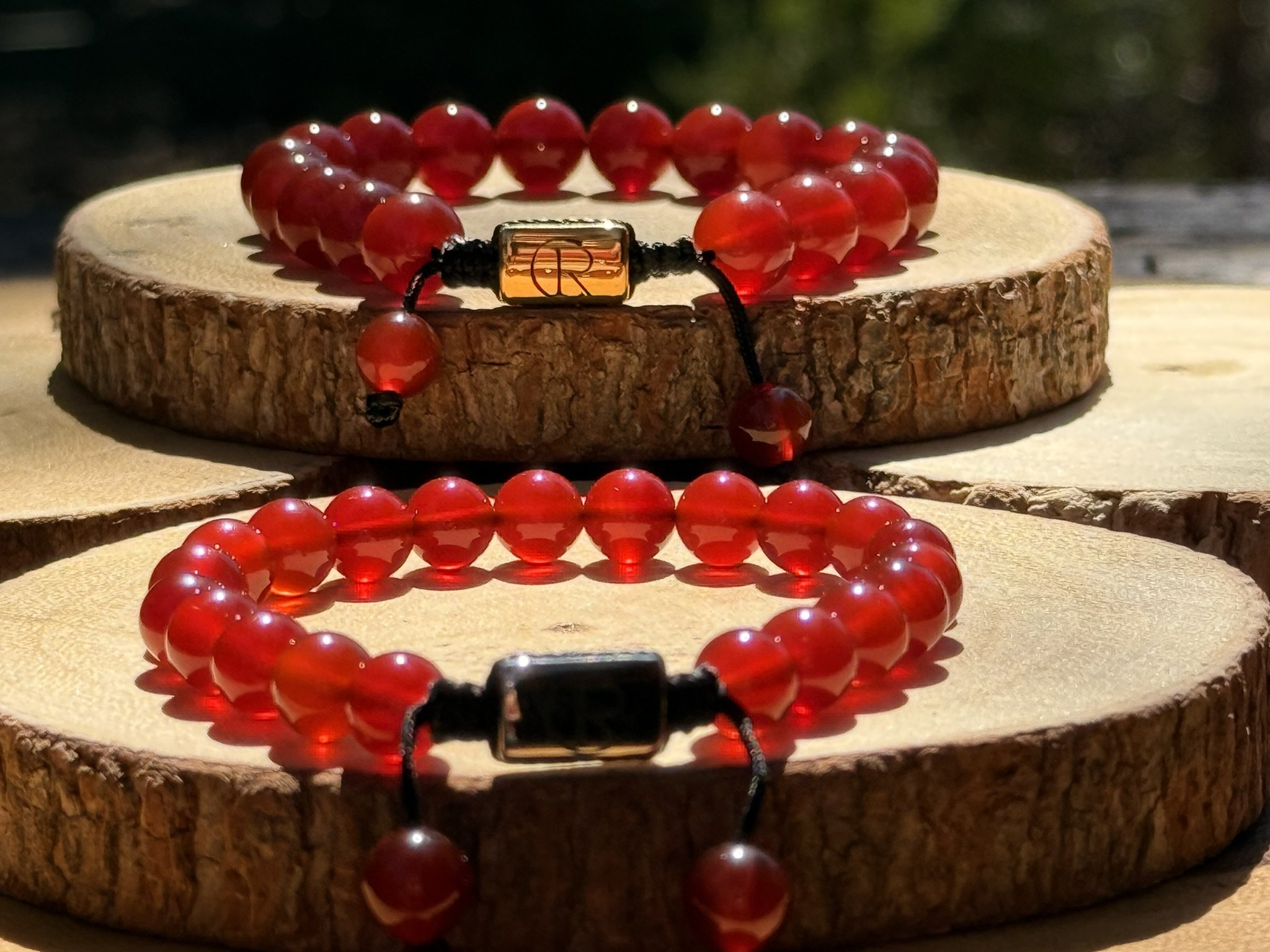
Where the other stones in this collection lean toward steadiness, Carnelian offers momentum. It has a long history as a stone of vitality and courage, carried by people who needed a physical push toward action rather than more time spent reflecting on what already needs to change. Carnelian is often credited with breaking bad physical habits and moving past old patterns — not through force, but by restoring the kind of energy and motivation that dependency and burnout tend to drain away. It overcomes the pull toward stagnation, the particular inertia of knowing exactly what needs to happen next and still not having taken the first step. For the moments self-control feels less like willpower and more like simply getting up and doing the next right thing, Carnelian offers a grounded, present-moment kind of courage — less about grand transformation, more about the bold, deliberate choice made today, and then again tomorrow. It's for the days recovery needs to look less like reflection and more like movement.
None of these stones do the work for you, and that has always been the point. Real healing, real sobriety, real self-control — these come from your own choices, made and remade, on the days it's easy and on the days it isn't. What Amber, Botswana Agate, Lepidolite, Amethyst, and Carnelian jewelry can offer is something smaller and steadier: a wearable anchor you can return to when an emotional trigger catches you off guard, when a craving feels loud, or when the day just gets long. Recovery isn't a single stone or a single choice; it's a practice, carried one intentional moment at a time. Wear these as a quiet reminder that the strength behind your recovery — the willingness to keep showing up for the person you're becoming — has been yours all along.
Shop all Addiction and Recovery Crystals

Amber is one of nature's most ancient healing substances — a fossilized resin that carries the Life Force of millions of years of sunlight and living things, warm to the touch and alive with an energy that draws off negativity and replaces it with warmth, optimism, and renewed belief in yourself. It is particularly known for its support during grief, depression, and recovery from addiction, not by making difficult feelings disappear but by infusing the emotional body with enough vitality to move through them. Ancient and alive at once, it's the stone you carry when you need to feel held by something larger than your circumstances. READ MORE